
+44 (0)1264 731200sales@forcetechnologies.co.uk
Force Technologies
Force Technologies quick answers on semiconductor obsolescence

Quick Answers

Short, expert answers to the questions engineers and buyers ask us most

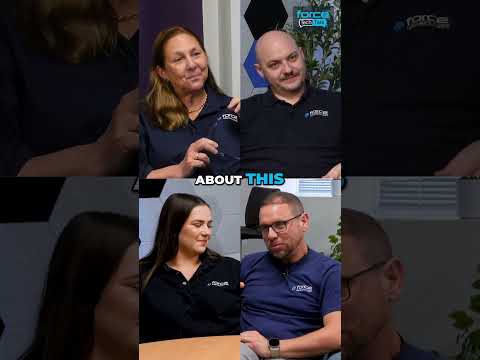
Why Eder wants visitors at Force Technologies every week
35s

Why Eder wants visitors at Force Technologies every week

In this video taken from our recent FAQ Tech Talk, Eder shares a personal dream he has never spoken about publicly. He wants Force Technologies to become a lean model company, with visitors from around the world coming to learn from how we work. Every new facility and every step of our growth plan is built with this in mind, so nothing goes to waste. This is just some of the thinking behind the environment we are creating at Force.

Watch the answer
How Do You Ensure Traceability When It Comes To Semiconductors
58s

How Do You Ensure Traceability When It Comes To Semiconductors

How do you actually guarantee traceability when you're buying electronic components? In this short, Ben explains why it's harder than most buyers realise, especially in the semiconductor world. Many commercial, industrial and military temperature-graded parts share the same base die. The grade on the label doesn't always tell you where the part really came from, or how it was handled on its way to you. Buy through the wrong route and you might get nothing more than a packing list, which isn't enough to prove a clean chain of custody back to the original manufacturer. The safest path is buyin

Watch the answer
Always Ensure Traceability Before Taking in New Inventory - Force Technologies Long Term Storage FAQ
34s

Always Ensure Traceability Before Taking in New Inventory - Force Technologies Long Term Storage FAQ

Force Technologies CEO, Karen Salmon explains why traceability is the first checkpoint before anything enters our Titan long-term storage, not the last. When one batch is missing paperwork and the others are not, we stop and ask the customer what they want to do rather than store it blind. It sounds simple, but it protects the investment our customers have already made, keeps their audit trail clean, and stops small paperwork gaps turning into big compliance problems later. If you are moving product into long-term storage, this is the process you want sitting behind it.

Watch the answer
Why Redesign is the Enemy, Sustainable Engineering with Jon Barrett | Tech Talks Ep. 2
35s

Why Redesign is the Enemy, Sustainable Engineering with Jon Barrett | Tech Talks Ep. 2

In Episode 23 of Force Technologies Tech Talks, CEO Karen Salmon sits down with an old friend and colleague Jon Barrett, founder of the Sustainable Engineering Alliance, to talk about how sustainable design is reshaping electronics and engineering. From product designer and engineering writer to founder of an alliance connecting OEMs with suppliers who cut environmental impact, Jon shares why a new generation of engineers now treats sustainability as part of the job, not an afterthought. This episode will go live on the 27th July at 09:00. If you want to keep up to date with the latest news

Watch the answer
Good investment, no traceability? That's a problem
34s

Good investment, no traceability? That's a problem

When you make a serious investment in stock, the value only holds if you can prove where it came from. In this clip, our CEO, Karen explains why every item entering our Titan long-term storage facility goes through a documentation and traceability check first, and what happens when the paperwork doesn't add up. We recently had three batches come in where two had matching documentation and one didn't. Rather than just storing it and hoping for the best, we went back to the customer to flag it, because getting it right at the point of storage protects the value of what you've bought. Good trac

Watch the answer
Is a Full Redesign the Right Answer to Component Obsolescence?
28s

Is a Full Redesign the Right Answer to Component Obsolescence?

Charlotte Hughes AIIOM, Commercial Director at Force Technologies, answers a question that comes up regularly from clients facing semiconductor obsolescence: is a full redesign really the right option? Before committing to a board or system redesign, there are alternatives worth exploring first. The time and financial costs of a full redesign can be significant, and there are often better routes forward depending on your component's lifecycle stage. Force Technologies specialises in obsolescence management, end-of-life component sourcing, form fit function replacement, and long-term storage

Watch the answer
How to spot counterfeit components
28s

How to spot counterfeit components

When it comes to identifying counterfeit components in the supply chain, the most visible indicator most people know to look for is sanding marks, where someone has physically removed the original surface markings and applied new ones over the top. As Ben Savage, Applications Manager at Force Technologies, explains in this clip, that method is actually quite rare, and the gap between what is detectable by eye and what is actually circulating is where the real risk sits. The ERAI 2024 Annual Report recorded 1,055 cases of suspect counterfeit or nonconforming semiconductors in a single year, a

Watch the answer
How Far Should You Go When Testing Critical Components
58s

How Far Should You Go When Testing Critical Components

When asked what defines how far you go with testing and whether there is a level of risk involved, Ben Savage, Applications Manager at Force Technologies, breaks down how AS6171 works in practice. The standard sets out low, moderate, and high risk levels, and it is the customer who decides which level their application requires. Most of the industry works at the moderate level, which maps closely to AS6081A with additional electrical testing. But for the most critical applications, such as aerospace, testing scales right up to burn-in and destructive batch testing to prove components are fit

Watch the answer
Why Electrical Testing Matters for Counterfeit Detection
53s

Why Electrical Testing Matters for Counterfeit Detection

For years, many organisations relied on visual inspection, paperwork verification and physical checks when assessing electronic components. But is that enough? In this Force Tech Talk clip, Ben Savage explains how standards such as AS6171 have evolved to include comprehensive electrical testing, helping organisations identify counterfeit, defective and suspect components with a much higher level of confidence. Key topics: • AS6081A vs AS6171 • Physical inspection and documentation checks • X-ray and D-Cap analysis • DC and AC electrical testing • Reducing the risk of counterfeit components

Watch the answer
How Counterfeiters Hide Fake Semiconductors Using Black Topping
40s

How Counterfeiters Hide Fake Semiconductors Using Black Topping

Can you spot a counterfeit chip just by looking at it? Not always. Ben explains how black topping works and why it fools even experienced inspectors.

Watch the answer
How to ensure the best price for obsolete electronic components
31s

How to ensure the best price for obsolete electronic components

In this video, Ben Savage from Force Technologies talks about ways in which you can avoid volatile pricing of components for you project. Having a clear forecast of the project over the next 10 years will enable you to predict how many components you might need and therefore you can order in bulk and achieve the best price. If you can lock the price in early with an order of 2,000 you won't need to go hunting around when components are more spares and harder to find. You can find out more about electronic component obsolescence by watching our Tech Talks here on YouTube.

Watch the answer
We missed the last time buy notice, what options do we have?
52s

We missed the last time buy notice, what options do we have?

Missing a Last Time Buy (LTB) notice is more common than most engineers admit. OEMs are not always reliable at issuing them, and when they do, the window closes fast. The moment you realise a component has gone end-of-life, assume you are not alone. Dozens of other engineers at competing companies have almost certainly missed the same notice. That changes how you need to move. Your first priority is to buy and bank whatever stock remains in the supply chain. If the part has only just been made obsolete, there will still be units sitting in distributor inventory and on broker shelves. Move qu

Watch the answer
Why do suppliers give very short or unclear end of life notices?
50s

Why do suppliers give very short or unclear end of life notices?

Why are end-of-life notices getting shorter and more unclear? In this quick insight, Charlotte and Karen unpack how industry consolidation, mergers, and shifting manufacturing strategies are reshaping the semiconductor landscape, often leaving buyers with less time to react. What does this mean for your supply chain planning? Watch Charlotte and Karen to find out.

Watch the answer
What are the biggest engineering mistakes when reacting to obsolescence under time pressure?
51s

What are the biggest engineering mistakes when reacting to obsolescence under time pressure?

When time is running out and millions are on the line, the biggest engineering risk isn’t delay, it’s counterfeit components. Under pressure, teams scramble to source parts fast. Even companies with strict quality standards can be tempted to step outside authorized channels. But that’s where the danger rises. Non-franchised sourcing significantly increases the risk of counterfeits, putting your entire project at risk. Speed matters. But quality and traceability matter more. This short video is part of our ongoing series of Tech Talks and features in the latest episode - Five Critical Quest

Watch the answer
Continuity Principle - Legal and Certification Conformity
43s

Continuity Principle - Legal and Certification Conformity

The final piece of the continuity principle is the legal and certification conformity. In this short, taken from our latest Tech talk, Karen and Charlotte talk about conformity. This is especially relevant in the defence industry, you need to be able to walk the walk and talk the talk. There are so many regulations and quality standards now that we have to be compliant. There is no point just getting the certificate you need to keep it up to date and ensure you obey they rules and guidance and stay informed as to what might be coming next.

Watch the answer
The Continuity Principle - Design Continuity
39s

The Continuity Principle - Design Continuity

Over the past few years, many major manufacturers in critical industries have been shutting down their fabrication facilities (fabs). The result? A loss of design continuity that’s creating serious challenges. When documentation and design files are lost, reviving an existing product becomes incredibly difficult, often forcing companies to start from scratch. Without access to original paperwork and design data, continuity disappears. That’s where Force Technologies can help ensuring your designs remain accessible, protected, and ready for the future. Get in touch to learn more. Interested

Watch the answer
The Continuity Principle - Life-cycle Management of Electronic components
47s

The Continuity Principle - Life-cycle Management of Electronic components

One of the key elements of Karen's Continuity Principle is Life-cycle Management of you electronic components. It is a vital part of ensuring the continuous availability of dies, packages, design records, and engineering talent to adapt when suppliers discontinue products. In this video, Karen and Charlotte talk about how Force Technologies have a strategy for our own products and can help you develop one for yours. This all folds into the services we offer at Force Technologies, especially out Titan Long-Term Storage facility which is now busier than ever.

Watch the answer
Continuity and Sustainability in Aerospace and Defence
36s

Continuity and Sustainability in Aerospace and Defence

Amongst the core values at Force technologies are continuity and sustainability which are essential in aerospace and defence. Unlike other industries they have to have continuous and reliable supply to keep things in the air, literally. In this short video, Karen explains why this is at the heart of everything we do and what led to Karen creating the Continuity Principle which you will hear more about in our latest Tech Talk. You can find a link to the full episode at the end of the video.

Watch the answer
Force Tech Talk Episode 19 - The Continuity Principle
15s

Force Tech Talk Episode 19 - The Continuity Principle

In the latest episode of Force's Tech Talks, Charlotte talks to Karen Salmon, CEO of Force Technologies about the Continuity Principle. You can watch the whole episode by subscribing now or following us on LinkedIn.

Watch the answer
Leadership Drives Lean Changes at Force technologies - Why Culture Shifts Matter
42s

Leadership Drives Lean Changes at Force technologies - Why Culture Shifts Matter

In this video taken from our 18th Tech Talk, Eder and Charlotte talk about why leadership is such a key part of our growth strategy at Force Technologies. Leadership is crucial for implementing lean changes and shifting company culture? Without leadership, efforts to 'preach about Lean and changes' won't succeed. Leaders must explain the importance of the changes and why they are moving to, for example, more inclusive meetings when they were previously smaller. Discover how leadership drives essential cultural transformation. You can catch up with the full episode here on our YouTube cha

Watch the answer
Boosting Productivity at Force Technologies
53s

Boosting Productivity at Force Technologies

In this video taken from the latest Force Tech Talk, Eder, our Quality Engineer explains how introducing the Kanban Board has brought the team closer, shifting the focus from chasing people to chasing tasks and targets. By writing their own tasks, team members feel more committed and aligned, creating a powerful sense of ownership and collaboration. “It’s been an amazing change.” – Eder You can catch up with the full episode "18" on our tech talk channel on Youtube.

Watch the answer
Embracing failure to grow your business
57s

Embracing failure to grow your business

At Force Technologies we see failure as a path to growth in our business. For us failing is an opportunity to learn, and making changes to the process helps serve customers, who are the most important focus. Every individual, regardless of their job title, can be seen as a "process engineer" who can improve the system. In this short video taken from our latest Tech Talk, Eder and Charlotte explain how look to improve our systems every day. You can find out more about our continuous improvement plans by watching the whole talk on our YouTube channel.

Watch the answer
Commercial Off the Shelf Package vs Custom Products Which Reigns Supreme?
49s

Commercial Off the Shelf Package vs Custom Products Which Reigns Supreme?

Many of our customers ask which packaging solution is best. In this video Ben and Charlotte discuss the preferred options when budget and lead times are not a constraint. This discussion highlights the trade-offs between standard commercial off the shelf packaging and custom packaging in high-reliability environments. Understanding these differences helps you make informed decisions for your long term component strategy. Watch the full Tech Talk episode to see the detailed breakdown of packaging solutions.

Watch the answer
What Kind Of Components Can You Store In Long-Term Storage?
54s

What Kind Of Components Can You Store In Long-Term Storage?

What kind of components are suitable for long-term storage? All semiconductor devices are subject to long-term storage. Plastic might be the most sensitive component in this regard. The internal silicon within a component, or wafers, can also be stored. Components like plastic devices, wafers, or die can be stored. If ceramic components are hermetically sealed to military standards, you do not have the risk of moisture or atmospheric concerns getting into the device cavity. Additionally, intermetallic issues are less of a concern because these components have been sealed and nitrogen-flus

Watch the answer
Plastic Moisture Sensitivity - The Popcorn Effect Explained
45s

Plastic Moisture Sensitivity - The Popcorn Effect Explained

Are your electronic components safe in storage? All plastic parts have a moisture sensitivity level. Over time, moisture permeates the plastic and can cause internal damage. The real danger? When you heat up that chip during a reflow process, the moisture outgasses, leading to the documented "popcorn effect". This can literally shatter the plastic! If you're keeping components in a standard warehouse, they will deteriorate. Don't risk your components! Watch this short by Force Technologies to learn the science behind the "popcorn effect" and why understanding moisture sensitivity is key to

Watch the answer
Plastic vs. Ceramic Packaging — What’s Right for Your Project?
58s

Plastic vs. Ceramic Packaging — What’s Right for Your Project?

In this clip from our latest Tech Talk, Ben Savage and Charlotte Hughes break down the key factors when choosing between plastic and ceramic packaging. Choosing between tooling speed and NRE costs to MIL-STD testing and thermal stress considerations. It is always a balancing act between cost, lead times, and technical requirements and we unpack it all. Watch the full episode for deeper insights into the COTS vs. Custom Packaging debate and what to watch out for in your next project.

Watch the answer
Custom Packaging Explained - What It Means For You
53s

Custom Packaging Explained - What It Means For You

What does custom packaging actually mean? Ben Savage and Charlotte Hughes answer your questions about Semiconductor Packaging and how it impacts your replacement IC depending on the demands of your application.

Watch the answer
Episode 16 IC Packaging - COTS vs Custom Packaging
20s

Episode 16 IC Packaging - COTS vs Custom Packaging

Tech Talk number 16 is going live this Thursday. In this episode of Force Technologies Tech Talks, Ben and Charlotte will explore one of the biggest topics we’re being asked about right now: COTS versus custom packaging. They break down what each one means, when to use them, and how they impact cost, lead time, and long-term reliability in high-reliability industries like defence and aerospace. If this sounds like something that’s relevant to your work, make sure to subscribe and turn on notifications so you don’t miss the full episode when it goes live this Thursday.

Watch the answer
Do you periodically take product out of long term storage and test it?
57s

Do you periodically take product out of long term storage and test it?

Should You Periodically Sample Stored Electronic Components? In this video, we address a common question in long-term component storage and obsolescence management: "Do you need to take product out and sample it periodically?" Our expert explains the importance of periodic inspection and testing of stored components—especially when dealing with extended build cycles or mission-critical applications. Learn when it's necessary to do visual and electrical checks, how often to do it, and why it matters to ensure long-term reliability and functionality. Whether you're in aerospace, defense, or an

Watch the answer
How hard can it be to find an alternative part
58s

How hard can it be to find an alternative part

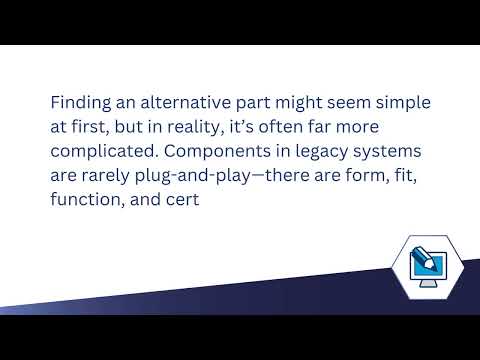
Famous Last Words - The Signs of an Obsolescence Challenge How hard can it be to find an alternative part? Finding an alternative part might seem simple at first, but in reality, it’s often far more complicated. Components in legacy systems are rarely plug-and-play—there are form, fit, function, and certification requirements to consider. For example, even minor differences in materials or tolerances can impact performance, reliability, and compliance with industry standards. Also, testing and qualifying an alternative part can be both time-consuming and expensive, often costing more tha

Watch the answer
Famous Last Words The Signs of an Obsolescence Challenge 1
53s

Famous Last Words The Signs of an Obsolescence Challenge 1

Obsolescence Management: Avoid Costly Downtime & Disruptions Waiting until a component becomes obsolete can lead to production delays, financial penalties, and unexpected costs. A reactive approach puts your operations at risk, while a proactive obsolescence management strategy helps you stay ahead of potential disruptions. At Force Technologies, we specialize in identifying obsolescence risks early and providing tailored solutions to keep your systems running smoothly. Don’t wait until it’s too late—take control of your supply chain today! 🔹 Subscribe for more insights on obsolescence man

Watch the answer
What is upscreening?
60s

What is upscreening?

Ben, the applications Manager for Force Technologies explains what Upscreening is. Upcreening is the act of functionally verifying a device's function to a higher specification level than originally outlined by the OEM. This is made possible by multiple factors. Including the fact that OEMs often use the same dye, packages and assembly techniques across the commercial industrial, and to some extent military temperature ranges. Force Technologies holds a very large library of test programmes that we have built up over the last 35 years. This gives Force Technologies an excellent test cov

Watch the answer

Download our White Paper

Resolving obsolete component shortages using die extraction from plastic packages and re-assembly into ceramic or alternate plastic packages


Download