
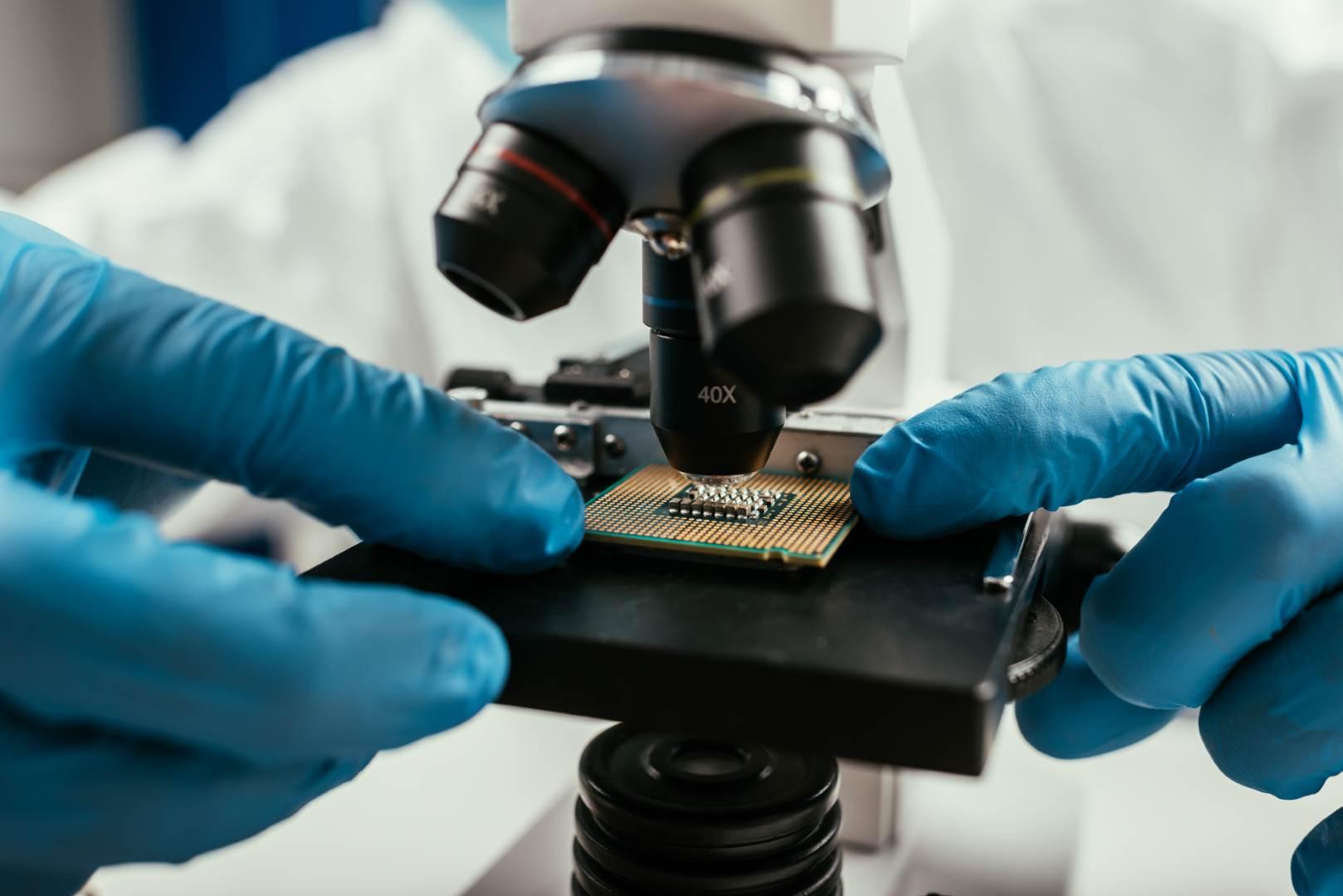
Semiconductor Upscreening
Qualify available components to MIL-STD-883 for higher-reliability applications
When semiconductors become obsolete, the exact qualified device may no longer be available. For long-life systems, this can create a gap between what the original design requires and what can still be procured. A commercial, industrial or lower-grade variant may exist, but it cannot be used in a higher-reliability application without appropriate evaluation and test evidence.
Upscreening provides a controlled route to assess available components against more demanding electrical, environmental or military-grade requirements. Force Technologies can test and screen components to the required flow, helping determine whether a suitable variant can meet the needs of your application without moving straight to redesign.
Explore whether upscreening is suitable for your component
Send us your enquiryUpscreening is a structured evaluation and test process used to assess whether an available component can meet a higher specification than its original grade. This may involve electrical testing at increased temperature, environmental testing, burn-in and screening to relevant requirements such as MIL-STD-883 Method 5004/M5005.
Depending on the device, upscreening can be applied to ceramic, metal can or plastic packaged semiconductors, with the test flow selected according to the component type and application requirement.
What tests does upscreening involve?
Upscreening applies the screening tests from the relevant standard, selected to suit the device type and the application. For hermetic devices this is typically MIL-STD-883 Method 5004 screening, with Method 5005 group testing where a customer requires it. The table shows the main stages and the weakness each one is designed to expose.
| Test | MIL-STD-883 test method | What it finds |
|---|---|---|
| Temperature cycling | TM 1010 | Failures induced by repeated transitions between hot and cold |
| Constant acceleration | TM 2001 | Mechanical or structural weakness, using a centrifuge |
| Burn-in | TM 1015 | Early-life failures, often called infant mortality |
| Electrical test at temperature | Per device specification | Devices that do not conform to datasheet characteristics |
| Fine and gross leak (seal) | TM 1014 | Packages that would admit moisture or contaminants |
| External visual inspection | TM 2009 | Damage sustained during screening |
Where a test programme does not already exist in our library, our in-house engineering team designs the hardware and software needed to support it.
Upscreening or redesign?
When the exact qualified device can no longer be procured but a commercial, industrial or lower-grade variant still exists, the choice is usually between upscreening that variant and redesigning the circuit around a part that is still in production. Upscreening assesses the available component against the requirement and leaves the qualified circuit untouched, which a redesign does not. It provides documented test data before a programme commits to redesign, production or further qualification, so the decision is made on evidence rather than assumption.
Upscreening is not always the most appropriate solution. Where a suitable variant does not exist, or testing shows it cannot meet the specification, our engineering team can assess alternatives, including die extraction, device characterisation and long-term storage, to help identify the best route for your programme.
The standards behind upscreening
Upscreening works because manufacturers often use the same die, package and assembly process across their commercial (typically 0 to +70 °C), industrial (−40 to +85 °C) and, to some extent, military (−55 to +125 °C) temperature ranges. The silicon may be capable of more than the datasheet grade promises, and screening to a recognised standard establishes whether a particular batch actually is.
Two standards do most of the work. MIL-STD-883 defines the individual test methods for microelectronic devices, with Method 5004 covering screening and Method 5005 covering group quality-conformance testing. MIL-PRF-38535 then specifies how those methods are applied within defined screening requirements, including the Class N and Class P flows for plastic encapsulated microcircuits. A typical Class Level B flow, corresponding to Class Q under MIL-PRF-38535, includes internal visual inspection, temperature cycling, constant acceleration and electrical test, then burn-in for a minimum of 160 hours at 125 °C, followed by further electrical test, fine and gross leak testing and final visual inspection. Class Level S flows, used for space, are more demanding again.
Before any screening begins, parts are verified to AS6171 anti-counterfeit protocols at goods-inward, whether they are supplied by us or by the customer, so the test evidence sits on a verified part.
Does upscreening make a part military qualified?
No. Upscreening does not change the manufacturer’s rating, and it does not place a commercial part on the Defense Logistics Agency Qualified Manufacturers List (QML). What it produces is documented test data against the invoked flow, which the design authority uses to justify fitting the part in a higher-reliability application.
Passing is never assumed. If a device cannot meet the required specification, identifying that early gives the programme time to consider alternatives, such as a form-fit-function replacement or another obsolescence mitigation strategy, rather than discovering the problem in production.
See upscreening explained
Frequently asked questions
Common questions about semiconductor upscreening
What is upscreening?
Upscreening, sometimes written as up-screening, is the process of evaluating and testing an available component to determine whether it can meet a higher specification or application requirement. This can include electrical testing, environmental testing, burn-in and screening to standards such as MIL-STD-883 Method 5004 where required. The result is test evidence, recorded against the batch or the individual device, that an engineer can use to justify fitting the part.
When is upscreening the right answer?
Upscreening is the right answer when the exact qualified device can no longer be procured but a commercial, industrial or lower-grade variant still exists. For long-life aerospace, defence and industrial systems, that variant cannot be used in a higher-reliability application without appropriate evaluation and test evidence. Upscreening provides that evidence before a programme commits to redesign, production or further qualification.
What types of components can be upscreened?
We can upscreen a wide range of semiconductor devices, including memory, microprocessors, FPGAs, and analogue components. If a test program doesn’t already exist in our extensive library, our in-house engineering team can design and implement the necessary hardware and software to support it.
Can commercial parts be upscreened to military requirements?
Yes, a commercial or industrial part can be assessed against military-grade requirements, but passing depends on the device and is never assumed. The test flow is chosen according to the component type and package. Ceramic and metal can devices are screened differently from plastic packaged devices, which are non-hermetic and behave differently under moisture, temperature and environmental stress. For plastic parts, MIL-PRF-38535 contains specific PEM screening flows (Class N and Class P).
Can plastic packaged devices be upscreened?
Yes, plastic packaged semiconductors can be assessed through upscreening, but the approach may differ from ceramic or metal can devices. The test flow needs to consider the device construction, package limitations and application requirements, particularly where higher-reliability or military-grade expectations apply.
Read more about plastic upscreeningHow do you ensure the quality and authenticity of the parts being upscreened?
All parts, whether supplied by us or by the customer, undergo rigorous goods-inward inspection and verification processes to AS6171 protocols. This ensures both authenticity and quality before any upscreening begins.
Can I submit my own components for upscreening?
Absolutely. We can test customer-owned goods as well as parts supplied through non-franchise distribution channels. Every component, regardless of source, must meet our stringent quality and traceability standards before being functionally upscreened.
Is upscreening the same as MIL-STD-883 testing?
Not quite. MIL-STD-883 defines recognised test methods and screening procedures for microelectronic devices. Upscreening uses appropriate tests, which may include MIL-STD-883 methods, to assess whether a component meets requirements beyond those guaranteed by its original grade. MIL-STD-883 is the toolkit; upscreening is the programme of work that selects from it.
Does upscreening make a part military qualified?
No. Upscreening does not change the manufacturer’s rating, and it does not place a commercial part on the Defense Logistics Agency Qualified Manufacturers List (QML). What it produces is documented test data against the invoked flow, which the design authority uses to justify fitting the part. Passing is never assumed. If a device cannot meet the required specification, identifying that early gives the programme time to consider alternatives.
Can a component be upscreened to a different operating temperature or speed?
Upscreening can be used to assess whether a component meets operating requirements beyond those guaranteed by its original grade, including a wider temperature range or a faster operating speed. Electrical testing under the required conditions provides the data to establish whether the device meets the specified parameters. It works because manufacturers often use the same die and package across their commercial, industrial and military temperature ranges, so the silicon may be capable of more than the datasheet grade promises.
How long does upscreening take?
Timescales depend on the device, the screening requirements and whether an existing test programme can be used. Some screening flows include extended burn-in, such as a minimum of 160 hours for a Class Level B flow, which sets a floor on the elapsed time, while developing a new test programme for an unusual device can add to it. Discussing requirements early helps identify the most appropriate approach and a realistic timescale.
What if no test programme exists for my device?
Our in-house engineering team can develop the hardware and software needed to test the device against the agreed requirements. This is assessed as part of determining the scope and feasibility of the upscreening programme, so an unusual or undocumented part does not automatically rule upscreening out.
Not sure which test approach you need?
Send us the part number, the application and the specification you need to meet. We will advise whether upscreening, plastic upscreening or device characterisation is the suitable route.
Talk to our team about upscreeningReady to discuss upscreening?
Send us your component details and we will advise whether upscreening is a suitable route for your application.
Get in touch