
Who solves obsolescence when the engineers have retired?
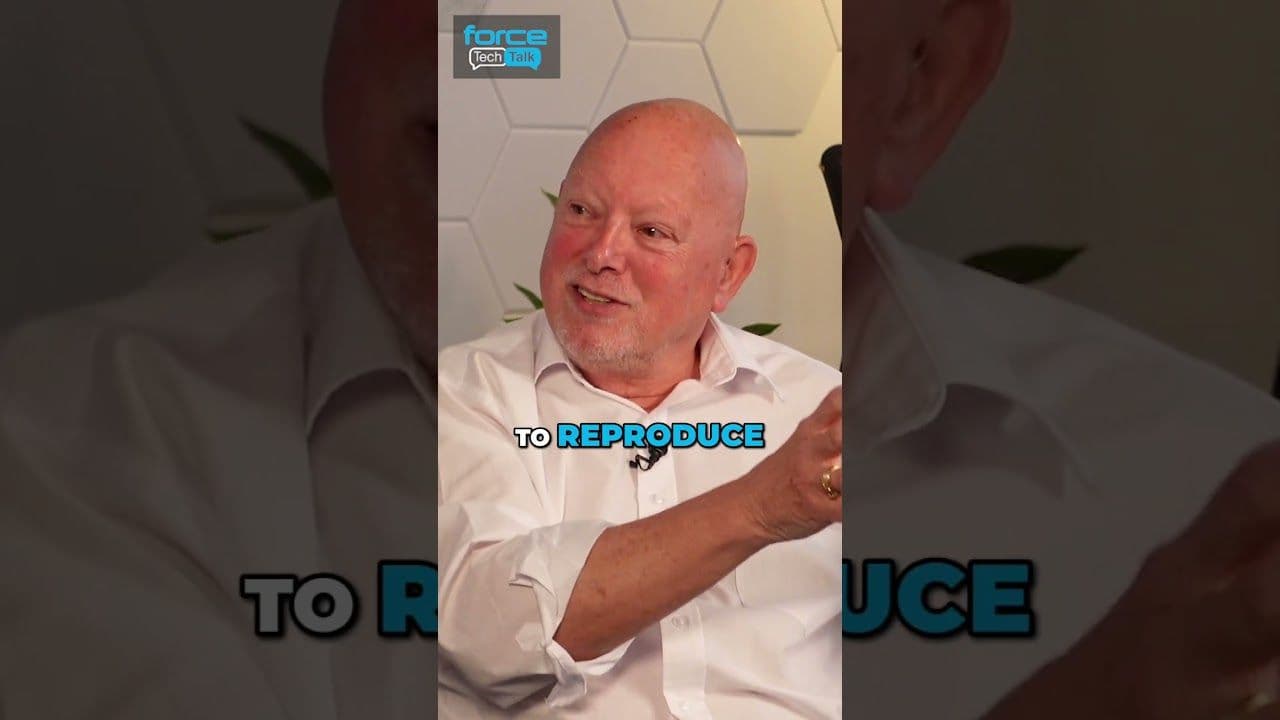
Increasingly, a specialist that is willing to take on the whole problem. In this clip from Force Tech Talk 24, founder Mike Salmon describes the conversation Force Technologies now has with customers. A system that may be worth 20 or 30 million is stuck because one small part of it has gone obsolete and nobody left on the programme knows what to do with it. In the past the customer would try to buy a replacement for the component. Now they bring the whole problem to Force, whether that is the buyer or the project manager holding it, and ask for it to be solved.
Why do customers no longer just buy a replacement part?
Because the part is no longer the problem, the system is. Mike gives two reasons. First, everything now interfaces with everything else, so a single obsolete component cannot be swapped in isolation without affecting the hardware and software around it. Second, the customer cannot find the engineers to do the work. Companies are always short of engineers, and the people who knew the original technology have retired. The customer is, in Mike's words, in a pickle, and handing the whole problem to a supplier who can engineer the answer is the practical way out.
What does solving the whole problem involve?
It means Force takes the whole system and makes it work with the part that is holding it up, rather than selling the customer a single device. Mike lists what that covers, from die banking in long-term storage to the test programmes written for each part.
| What Force does | What it means in practice | Why it matters to the programme |
|---|---|---|
| Puts the die into stock for 20 years | Banked die held in long-term storage so the part can be built whenever it is needed | Supply is secured for the remaining life of the system |
| Designs new packages | A package built to match what the customer's existing board expects | The qualified design stays untouched |
| Designs the test programmes | Test hardware and software written for the part so every device is proven before it ships | No reliance on test programmes the original manufacturer no longer supports |
| Gets the die, or redesigns it | Where the original die cannot be obtained, Force redesigns a die and makes it | The part survives even when the original manufacturer is long gone |
| Builds to order | When the customer needs a thousand parts, Force assembles the die and packages and ships them | No engineering effort is needed from the customer each time |
Is old technology difficult to reproduce?
No. Mike's view is that the old technology is not that difficult to reproduce, and that newer silicon can quite easily be made to work in the old part with modifications. That is the engineering Force takes off the customer's hands. Once the solution exists, the customer knows that whenever they need a thousand of those parts they can come to Force, and Force will build a thousand, taking the die and the packages, assembling them and shipping them out.
How does this fit with recognised obsolescence practice?
It covers the resolution steps that come before redesign. The US Department of Defense SD-22 DMSMS guidebook sets out a range of resolutions, from existing stock and life-of-type buys through alternate supply, emulation and re-manufacture, with major redesign as the costliest option. Taking on the whole problem is a way of working through those earlier options with a single supplier, so that the programme is never forced into redesign simply because the knowledge to do anything else has left the building. Within Force’s own Continuity Principle, this sits under Design Continuity, alongside Lifecycle Management and Form Fit and Function Replacements.
What should you send Force?
Three things to start with, and the conversation can begin before any of the original engineers are tracked down.
- The part number and the quantity you expect to need.
- The application, including the system it sits in and how long that system needs to stay in service.
- Whatever documentation survives, even if it is incomplete. If the original die exists we will tell you how we would bank it and build from it. If it does not, we will tell you honestly and show you the redesign route instead.
Force Technologies has supplied, tested, re-manufactured and stored obsolete semiconductors for aerospace, defence, rail and industrial customers since 1986, from our UK facility in Wiltshire, certified to AS9100 Rev D.
Frequently asked questions
Who solves obsolescence when the engineers have retired?
Increasingly, a specialist supplier that takes on the whole problem. Force Technologies banks the die for 20 years, designs new packages and test programmes, redesigns the die where the original is unavailable, and builds the part to order whenever the customer needs it.
Why do customers no longer just buy a replacement part?
Because modern systems are so interconnected that one obsolete part affects everything around it, and because the engineers who understood the original technology have retired. Customers ask Force Technologies to solve the whole problem instead.
Is old semiconductor technology difficult to reproduce?
No. In Force Technologies' experience the old technology is not that difficult to reproduce, and newer silicon can be made to work in the old part with modifications.