

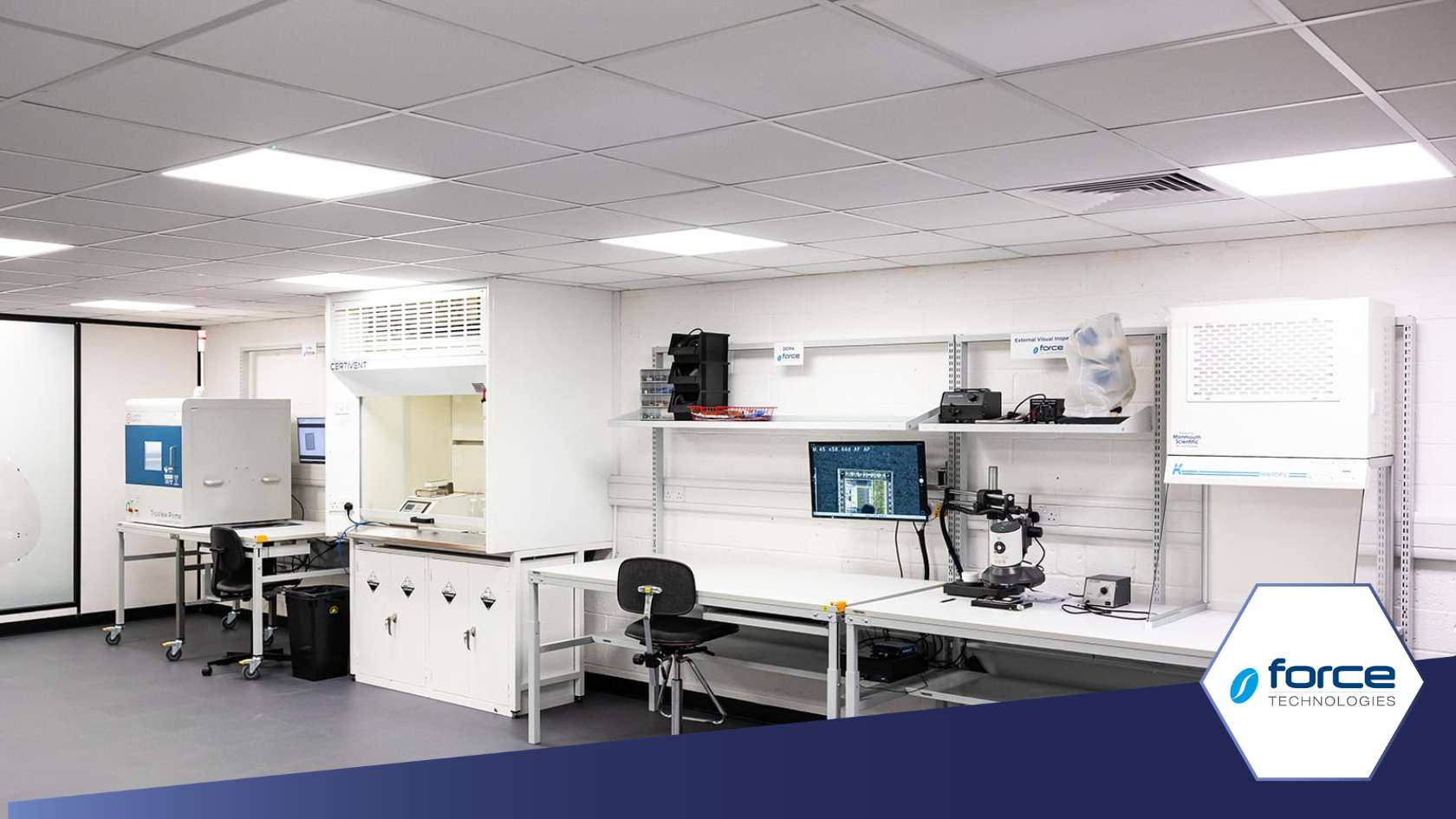
Force Technologies has opened a UK semiconductor test lab and a long-term component storage facility. The lab tests electronic components to the AS6171 anti-counterfeit standard, and the storage lets customers keep producing for up to 20 years. Both are UK owned and privately funded, built to protect aerospace, defence, automotive and rail supply chains from counterfeits and component shortages.
What is semiconductor test lab?
A semiconductor test lab is a facility that tests and certifies electronic components, particularly semiconductor devices, on British soil. Force Technologies has opened a new UK Sovereign Contingency Assurance Centre test lab for exactly this purpose. It is UK owned and privately funded, and it exists to keep component test and certification capability inside the UK rather than sending parts to test houses in the US, China or Taiwan.
You can see a recent interview and tour of the Titan Long Term Storage Facility by watching the video created by Sustainbale Engineering Magazine below.
Why does testing components locally matter now?
Testing locally matters because counterfeit electronic parts are entering the market as component allocation tightens. When demand outstrips supply, counterfeits rise. AI is absorbing huge volumes of memory such as DRAM, so smaller manufacturers increasingly struggle to source genuine parts. With geopolitical pressure growing, UK and European customers now want their parts tested somewhere they can visit and watch the work being done.
What standard does the lab test to?
The lab tests to AS6171, the SAE standard for detecting suspect and counterfeit electrical, electronic and electromechanical parts. According to SAE International, AS6171 sets uniform requirements and test methods, including X-ray and electrical testing, to mitigate the risk of using counterfeit parts. Force Technologies is already running batches through inspection, destructive physical analysis (DPA) and X-ray fluorescence (XRF), and carries out residual gas analysis (RGA) on sealed parts destined for harsh environments such as subsea systems.
How does long-term component storage work?
Force Technologies’s Titan Long-term Storage facility lets customers secure supply for up to 20 years by storing product under nitrogen at component, die or package level. Die-level storage is the most economical option. When a customer needs product, Force Technologies takes it out of store and builds it as required, so projects can keep running long after a part goes end-of-life. This directly protects against allocation and “last-time-buy” pressure.
Customers are welcome to visit and see their parts being tested. To arrange a tour or discuss testing and storage, get in touch with the Force Technologies team via our contact page or with the sales team vie email sales@forcetechnologies.co.uk